Is all about the origins

Comment

Is all about the origins

From October 17th to the 20th of 2019 Bogota, the capital of Colombia hosted, what is becoming, one of the most important coffee expos in the world. I have had the pleasure to visit the fair (Cafes de Colombia) three times in the past. This has been by far the best event ever produced by the organisers.

Mostly funded by the FNC (National Federation of Coffee Growers of Colombia) Cafes de Colombia 2019 hosted the Colombian barista championships, the National filtered coffees championship, the Colombian Coffee roasters Championship and the National Cupping Championship.

For 3 days it was a complete party under the roof of one of the main buildings at the international exhibition centre (Corferias) in Bogota. What really grabbed my attention this time was the staggering amount of coffee growers participating in this edition of the expo. Coffee farmers and the communities around them are starting to understand the vital roll they play in the chain of international coffee trade.

CCC-89.jpg

For us, specialty coffee roasters, origins are the foundation of our businesses. Quality and consistency depend inherently from the crop and all its attributes. We can only unlock what is hidden in the bean by the farmer.

Following our amazing experience at the expo in Bogota we landed in Armenia’s airport in El Eden. Right in the middle of Colombia’s coffee axis we went to one of our favorite places on earth… Finca La Pradera. Owned by the Arcila Family this is one of the HQs of Cofinet. They are specialty coffee distributors deeply involved with direct trading, sustainability, both environmental and social, and premium quality. We have been working together since our beginnings. Every time we visit we feel right at home.

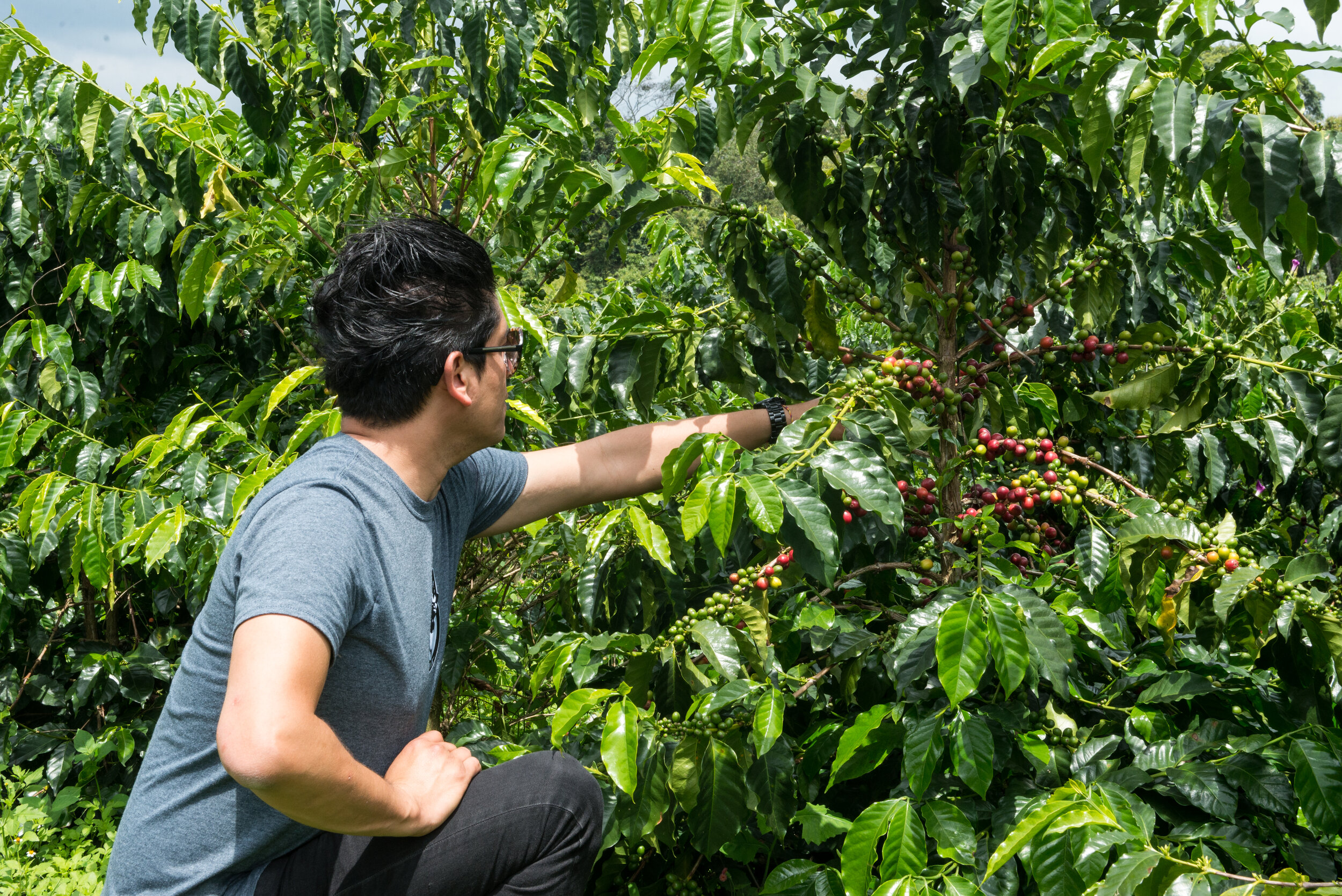
This particular year our visit to Cofinet’s HQs hold something extra-special. Colombian Connection Coffee was officially starting a direct trade relationship with Cesar Buesaquillo. One of the youngest farmers recruited by Cofinet in its high quality and sustainability program.

Cesar’s extended fermentation, honeys and natural is the the responsible for our Single origin of Line “LA BOMBA”

By experience we have had the privilege of witnessing how empowering it is when a Farmer is made aware of the great impact they have in the coffee chain. Cesar is one of our associates, perhaps one of the most important. The understanding of such responsibility pushes us both to be better and to strive for our best. It is only fair and respectful as business partners to exchange the right pay for the right product.

Globally, the specialty coffee industry is facing an important challenge. Year after year more young farmers abandon coffee production due to low prices, lack of guarantees and constant pressure from macro-distributors and commodity brokers. They often move to other crops like oranges, avocados or even live-stock.

This is exactly why transparency and ethical practices are so important for the specialty coffee community. We can not tolerate the misuse of such term: “Specialty Coffee” while most coffee roasters keep on purchasing low-grade commodity green beans for their espresso blends (Biggest percentage of sales). Such businesses only invest in ethical coffees to maintain their high end lines (Smallest percentage of sales) in a marketing exercise. Such common practice is putting the future of quality coffee under threat.

The industry is full of pretenders offering good quality Singe Origins, which we all know are sold in lower quantities and often bought from big coffee brokers, altogether with state of the art equipment supplying Espresso Blends at prices way to low to resist. When one knows the world of coffee trade it is obvious to spot where the savings are: Right in the espresso blend which accounts for at least 80% of a coffee roaster revenue… Please, do not expect any high quality, ethical or sustainable coffees inside that kilogram bag but make no mistake in knowing for sure that such amazing low price is only contributing to the collapse of quality coffee production, the wellbeing of coffee farmers, the environment and their communities. We are happy to know that a very significant number of coffee roasters and independent green bean suppliers are committed to Specialty Coffee and what such term truly represents. It is up to cafe operators and the consumer to keep supporting companies with such values. It is important then to get informed, to pass beyond the perfectly edited images of facebook and Instagram and get to know the real origin of what we are purchasing.

We are happy to see businesses thriving and growing but not when it is at the expense of the most vulnerable, yet, the real heroes and most important pieces of the coffee puzzle: The Farmers and their communities.

Cesar X Vela

Comment

Coffee, a world as deep as the ocean and as coloUrful as a rainbow

Comment

Coffee, a world as deep as the ocean and as coloUrful as a rainbow

When I was given the opportunity to write this blog I couldn’t stop thinking in the boy that used to drink instant coffee thinking that our choices were limited by the kind of blend in the label. As any other developing country, in Colombia we were drinking the left overs, all the beans that were not suitable for exportation.  Still we loved coffee and sure one could differentiate from a well prepared cup from an average or even undrinkable one… nothing that couldn’t be fixed with 2 or 3 cubes of sugar (still remember those?) 

The Industry has come a long way to the times of Specialty Coffee, something we cannot take by granted as the coffee world faces some big challenges ahead. Generally speaking we could say there are 2 families of coffee beans: Robusta and Arabica. Robusta is mostly used for instant coffee or as a source of caffeine and other sub-products that can be extracted from it.  This is due to its higher levels of caffeine which also gives it a substantial bitter taste to that compared to the Arabica bean, if they were to be roasted equally. Arabica in the other hand is like the Royal Family, is elegant and has a wider flavor gamut as a result of a constant evolution and adaptation to different terroirs.

Educational Specialty Coffee Foundations

If we were to dig-in in the Arabica family, then we would end up writing a book. So to keep it simple let’s just focus in the fact that every Country that produces Arabica beans does offers more than one varietal, and in many cases is this varietal what determines the kind of cup one will get. Then, in order to achieve a higher score in the cup, the farmer may decide to pick a specific varietal. But that is just the beginning as the place, the altitude and the way the coffee is processed may change the result substantially. The most popular processing methods we know are: Washed, Honey and Natural but we are not limited to it as there are many other experimental methods that are taking the specialty coffee scene as the next trends to follow.

Once a coffee is being picked and processed it is in the hands of the coffee roster to unlock those flavors trapped inside the bean and make sure they are kept “intact” –as much as possible-. It wouldn’t be too crazy to say that a light roast is basically designed to expose the most delicate notes of the bean and is most probably better for alternative brewing methods (V60, Aeropress, Chemex, Syphon, French Press, Stovetop and Cold drippers). A medium roast targets the espresso machine. A more intense extraction where one still wants to preserve as many original notes as possible and still being able to balance the acidity, sourness, body and bitterness that will work fine as a black coffee or as milk based coffee. A dark roast, in our opinion, shouldn’t be included as an option in the Specialty Coffee game as this is a technique used for many players to hide the defects of the beans.

Another factor to decide how a bean is roasted could be the processing method. Washed coffees are the more commons ones as is a standard adopted for most of the coffee farmers around the world. The coffee is picked, the skin and pulp are washed out, and the bean inside the coffee cherry is dried out until reaching the optimal humidity. Honeys and naturals are both fermentation techniques designed to trap the sweetness of the pulp and give the final bean a more elegant and delicate taste. In the first one only the skin is taken out leaving the pulp around the bean. For the Naturals neither the pulp nor the skin are removed before the drying process. It is for this reason that many of the specialty coffee roaster choose to go for a light or medium light roast when working with Honey and Naturals as they are fully packed of sweeter and delicate flavors.

As one begging to explore this deep world of choices the more you try the closer you get with your perfect cup of coffee. For some a Washed Medium Roast is perfect as they loved the intensity of a coffee espresso, for others a Light Roasted Honey is best for they Pour Overs as they opt to perform the full coffee ritual and have develop a pallet to appreciate the different layers it has to offer. That was the reason why we brought to you the now finished Diofanor’ Trilogy: same bean processed under the 3 different methods. Amazing, wasn’t it?

This month we launched La Bomba , a Medium Light Roasted coffee. Rafael Amaya is the farmer behind this amazing single origin and after experimenting different ways to improve his cup he developed his own processing technique: A Washed extended fermentation process.  This coffee has been roasted medium light so it can be versatile to perform as an espresso or black coffee, and still giving an impressive cup when enjoyed with your preferred alternative brewing method.

Nicolas Tobon

Comment

//if you already have jQuery on your site, then just copy the code below.